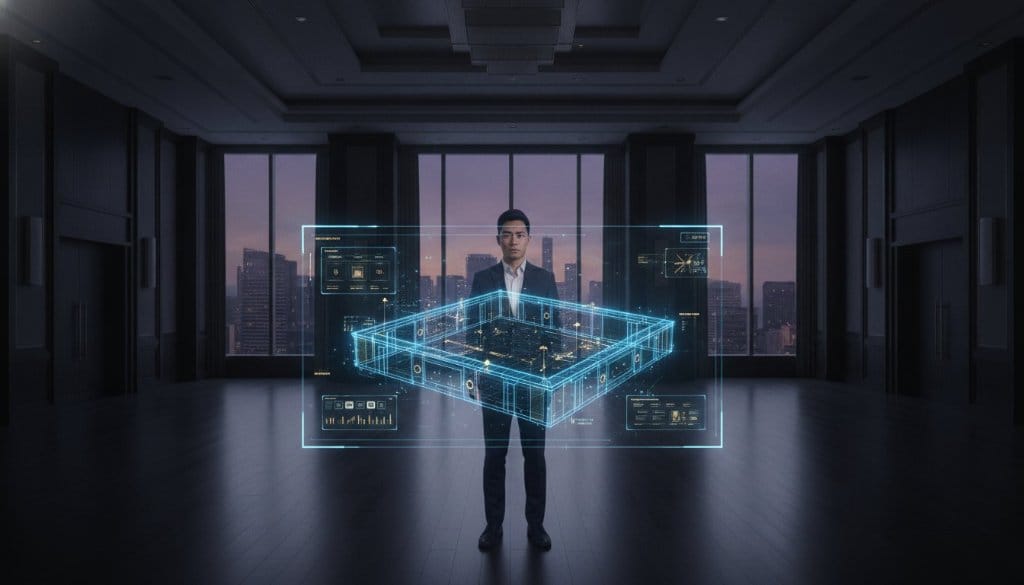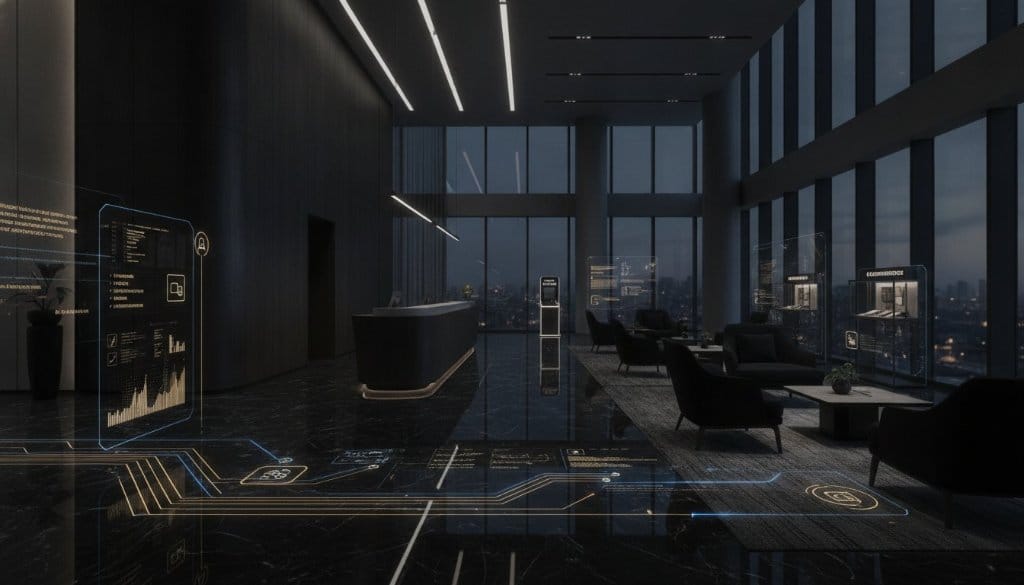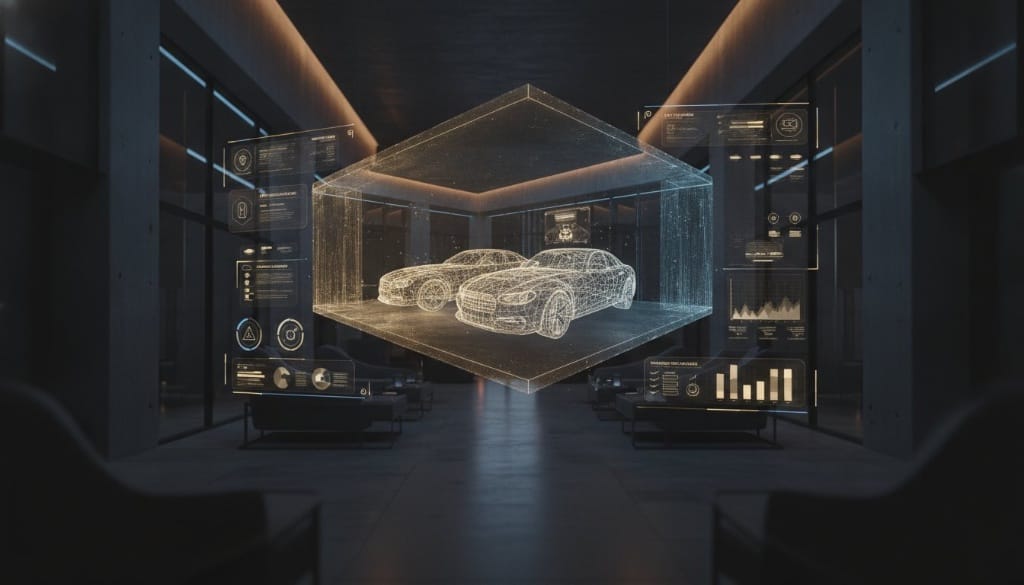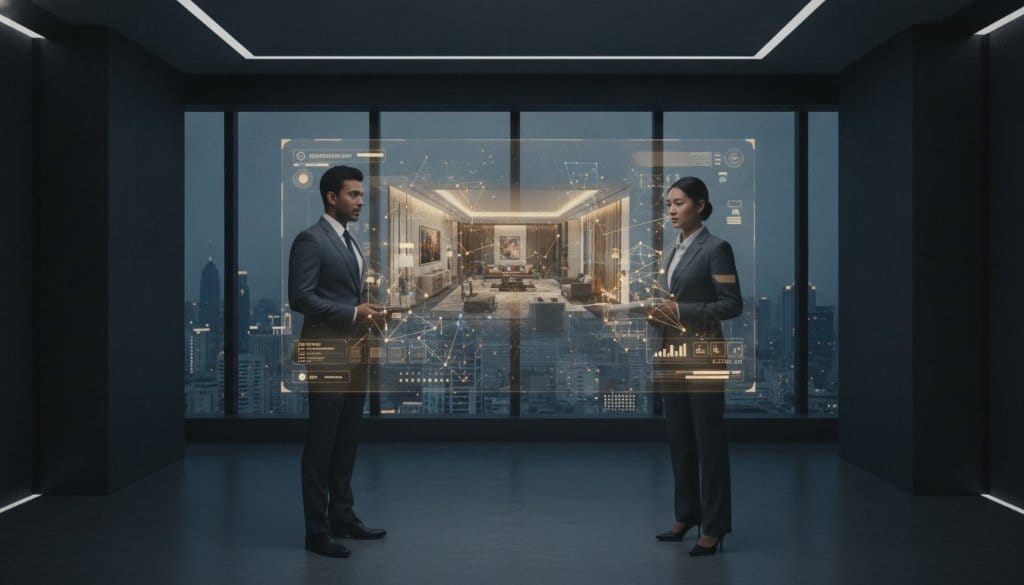
A panoramic walkthrough is not a strategy. It is a commodity. For years, the industry has settled for static, passive scans that look impressive but lack the intelligence to drive a single direct booking. You've likely seen the limitation firsthand; high-net-worth clients and MICE planners want more than a passive digital tour. They demand an experience that mirrors the physical luxury of your brand. If your current tech doesn't provide data, it isn't a business tool. It's a digital paperweight. This is where 3D spatial marketing solutions have undergone a radical transformation.
You understand that a premium physical space deserves a premium digital presence, yet the dependency on third-party OTAs remains a constant drain on your ROI. We're here to change that. You'll discover how to evolve Matterport’s foundational scans into intelligent, interactive business environments that qualify remote leads and accelerate decision-making cycles. This guide previews the shift from passive observation to active sales enablement, highlighting the proprietary layers that turn a digital twin into a high-performance commerce platform.
Key Takeaways
- Traditional 360 walkthroughs are passive. Learn how to leverage 3D spatial marketing solutions to transform static views into active, data-driven sales enablement platforms.
- Discover the strategic advantage of layering proprietary intelligence onto Matterport foundations, evolving basic scans into high-fidelity branded environments upgraded for business.
- Gain insight into the hardware stack of 2026, where LiDAR and drone mapping converge to provide the surgical accuracy required for luxury project presentations.
- Identify the shift from visual novelty to measurable ROI by integrating live booking engines and interactive commerce tools directly into your spatial assets.
- Outline a clear progression for operationalizing your digital twin, ensuring it functions as a persistent business asset rather than a one-time marketing expense.
Table of Contents
- Beyond Passive Observation: Defining 3D Spatial Marketing Solutions
- The Intelligence Layer: Upgrading Matterport for Business Functionality
- Industry-Specific ROI: How Spatial Experiences Drive Commercial Outcomes
- The Technical Architecture: LiDAR, Drone Mapping, and High-Fidelity Capture
- Implementing Your Spatial Strategy: From Digital Twin to Revenue Engine
Beyond Passive Observation: Defining 3D Spatial Marketing Solutions
A visual is a starting point, not a destination. For the modern enterprise, 3D spatial marketing solutions represent more than a digital walkthrough; they are the strategic deployment of immersive environments to drive specific business outcomes. The industry has long relied on static 360 panoramas that offer a passive, disconnected experience. These tools allow a user to look, but they don't allow them to act. A true Digital twin is a living asset. It's a high-fidelity replica that serves as an active engagement platform. At 360INT, we believe technology is merely the foundation. Strategy is the actual product.
The Death of the Passive Virtual Tour
Standard walkthroughs are failing the modern luxury consumer. They feel "cheap" and passive, often lacking the sensory depth required to evoke an emotional connection. Basic Matterport scans provide the geometry, but without custom intelligence, they remain hollow shells. Our "Contrast and Elevate" approach identifies these industry shortcuts as insufficient. We utilized Matterport as a foundational layer, but the experience is entirely enhanced by 360INT. We move your brand from mere utility to deep immersion, replacing static pixels with intelligent, interactive business environments. The next evolution of Matterport isn't about better photos; it's about better results.
Spatial Marketing as a Revenue Engine
In 2026, spatial computing has moved from a novelty to a commercial requirement. These solutions serve as a revenue engine by reducing friction throughout the buyer's journey. When a client can virtually navigate a venue or showroom, they develop "spatial memory." This psychological connection increases brand recall and accelerates decision-making cycles. By transforming a scan into an experience sales tool, you qualify remote leads before they ever speak to a sales representative. It's about shifting the narrative from "looking at a space" to "operating within a space." This evolution ensures that your digital presence matches the physical luxury of your brand while driving measurable ROI. 360INT does not simply create virtual tours; we build platforms for commerce.
The Intelligence Layer: Upgrading Matterport for Business Functionality
A scan is a skeleton. Intelligence is the soul. While many providers stop at a standard capture, our 3D spatial marketing solutions evolve that geometry into a high-performance business asset. We have Utilized Matterport. Enhanced by 360INT to ensure that every pixel serves a commercial purpose. This isn't just about looking at a property; it's about the data layer that sits on top of it. We treat the digital twin as a living asset that grows with your business, moving far beyond the "one-and-done" production cycle of traditional photography.
Modern digital twin technology is no longer defined by visual fidelity alone. It's defined by the strategic interaction it facilitates. By layering custom branded storytelling overlays, we guide the user journey with surgical precision. Instead of leaving a potential client to wander aimlessly, we use dynamic content and live data feeds to narrate the brand story. This is the next evolution of Matterport, where the environment reacts to the user, providing real-time information that drives engagement and trust.
Interactive Sales Tools and Booking Integration
Transforming a walkthrough into a transactional platform requires deep technical integration. Our intelligent Matterport experiences allow luxury hotels and resorts to embed live booking engines directly within the 3D space. This captures high-intent guests at the exact moment of peak engagement, reducing the friction that usually leads to abandonment. For retail brands, we turn showrooms into shoppable digital stores. Every product becomes an interactive hotspot, bridging the gap between digital discovery and direct e-commerce transaction. It's a seamless journey from wonder to purchase.
MICE Measurement and Operational Tools
For the MICE and event sectors, the utility of our 3D spatial marketing solutions is even more clinical. Event planners don't need "cool" tech; they need precision. We provide remote venue inspection tools that allow organizers to measure ballrooms and event grounds with millimeter accuracy. This streamlines logistics and floor plan planning without the need for multiple site visits. Crucially, we track spatial interaction data to qualify leads. By identifying which areas of a property capture the most attention, we provide your sales team with the insights needed to close deals faster. If you're ready to see how these interactive layers can redefine your sales funnel, you can explore a tailored strategy for your property.
Industry-Specific ROI: How Spatial Experiences Drive Commercial Outcomes
ROI is the only metric that matters. While visuals capture attention, 3D spatial marketing solutions capture revenue. By focusing on sales enablement rather than mere aesthetics, we transform your digital twin into a high-performance engine for growth. This is especially critical in high-stakes sectors where the distance between interest and investment is often measured in thousands of miles. We don't just show a space; we provide the tools to sell it.
One of the most significant shifts in 2026 is the reduction of dependency on third-party aggregators. For years, brands have paid high commissions to OTAs and listing sites because their own digital presence lacked the depth to close a deal. Intelligent Matterport experiences change this power dynamic. By providing a superior, interactive environment on your own domain, you drive direct bookings and sales, keeping your margins intact while providing a premium customer journey that third-party platforms cannot replicate.
Luxury Hospitality and MICE Sales
In the luxury sector, the "site visit" has traditionally been the biggest bottleneck in the sales cycle. Utilizing high-fidelity virtual tours allows your sales team to walk international event planners through ballrooms and suites in real-time. This reduces the decision-making cycle from months to days. When a MICE organizer can precisely visualize a floor plan and logistics from their office in London or New York, the friction of distance disappears. You're no longer just another listing on an OTA; you're a transparent, accessible partner with an engagement platform that stands out from the competition.
Retail and Showroom Commerce
Retail is no longer confined to four walls. We create "Brand Worlds" that serve as the digital equivalent of a personal shopper. By integrating AI-driven object recognition, we allow customers to engage in 3D online shopping where every product is interactive. These guided purchasing journeys use product recognition technology to provide instant specifications and e-commerce integration. It's a seamless transition from discovery to checkout, moving beyond the limitations of a physical store to capture global demand 24/7.
High-End Real Estate and Development
For real estate developers, time is the most expensive commodity. Our spatial solutions serve as a rigorous buyer qualification tool. By providing an exhaustive, intelligent digital twin, you ensure that only high-intent leads request physical viewings. For off-plan developments, 3D spatial mapping allows for project presentations that feel tangible long before the first stone is laid. We utilize AI-driven room recognition to automate property staging, allowing prospective buyers to assess the potential of a space with surgical clarity. This isn't just marketing; it's a faster path to closing.
The Technical Architecture: LiDAR, Drone Mapping, and High-Fidelity Capture
High-fidelity results require more than a smartphone or a consumer-grade camera. The technical architecture behind elite 3D spatial marketing solutions involves a complex stack of LiDAR sensors, photogrammetry, and specialized software kernels. While hobbyists might offer simple scans, we handle the complexity of global-scale capture for luxury assets. We've utilized Matterport as the baseline, but the precision is enhanced by 360INT through surgical data integration. Our team manages everything from signal processing to the final cloud-based rendering, ensuring that the data is as robust as the visuals. It's a balance of technical authority and visionary execution.
For superyachts and high-end industrial assets, we employ photogrammetry to create inspection-grade digital twins. This isn't just about a pretty picture. It's about a geometrically accurate model where every bolt and seam is accounted for. This level of detail moves the conversation from marketing into operational utility. You aren't just looking at a vessel; you're navigating a data-rich environment where every surface is a measurable asset. This transformation from a passive image to a functional tool is what defines our approach to the next evolution of Matterport.
Aerial LiDAR and Drone Mapping
Mapping a single room is one thing. Mapping a 200-acre resort is another. We use drone 3D scanning and aerial LiDAR to document architectural sites with millimeter precision. Most providers offer standard aerial photos that are essentially flat. We provide a functional 3D site map. This allows event planners to analyze terrain, line-of-sight, and logistics for large-scale commercial developments without stepping foot on the property. As drone surveys are often 50-75% less expensive than traditional ground-based methods, the business case for this level of spatial intelligence is undeniable. We provide the precision required for architectural documentation and site analysis, ensuring your digital twin is a faithful replica of the physical world.
VR180 and Cinematic Spatial Media
Technical precision provides the body, but cinematic media provides the soul. We believe 3D scans can feel sterile without a human element. To bridge this gap, we've evolved traditional videography into immersive VR180 experiences. These cinematic brand films are layered into the digital twin to evoke emotion and tell a story. Most virtual tours are cold and clinical; ours are warm and aspirational. When combined with our architectural photography standards, the result is a premium digital presence that matches the physical luxury of a global brand. We don't just capture a space; we capture the feeling of being there.
Implementing Your Spatial Strategy: From Digital Twin to Revenue Engine
Production is only the beginning. While many vendors deliver a link and consider their job done, we view the capture phase as the baseline for a much larger commercial ecosystem. To drive measurable results, you must move from owning a digital asset to operationalizing a revenue engine. Effective 3D spatial marketing solutions require a transition from passive viewing to active business integration. It's about ensuring your engagement platform isn't an island; it must be the bridge that connects your physical luxury to your global audience.
Integrating these platforms into your existing digital marketing stack is what separates a gimmick from a strategic tool. When your digital twin is synced with your CRM, booking engines, and social channels, it becomes a persistent sales representative that never sleeps. We focus on measuring success through high-intent metrics like lead qualification and direct sales rather than vanity numbers like "views." If your spatial asset isn't shortening your sales cycle, it isn't working hard enough.
The 5-Step Spatial Deployment Roadmap
- Step 1: Strategic Discovery. We begin by aligning the spatial experience with your specific business goals. We don't scan for the sake of scanning; we scan to solve a sales or operational bottleneck.
- Step 2: High-Fidelity Capture. Our team executes the professional mapping of the physical asset. We utilize the most advanced hardware in the 2026 stack to ensure every millimeter is accounted for.
- Step 3: Intelligence Layering. This is the "Utilized Matterport. Enhanced by 360INT" phase. We add custom software, branded storytelling overlays, and live booking tools that turn a scan into an interactive business environment.
- Step 4: Integration. We sync the platform with your Google Business profile, website, and social media. The goal is to make the experience accessible at every touchpoint of the buyer's journey.
- Step 5: Analysis & Optimization. We use spatial interaction data to refine the journey. By seeing where users linger, we help you optimize your physical and digital layouts for maximum conversion.
Future-Proofing Your Digital Presence
The internet is becoming spatial. Assets created today are the foundation for the next decade of human-computer interaction. With the widespread adoption of hardware like Apple Vision Pro and Meta Quest in 2026, the demand for high-fidelity 3D environments has reached a critical mass. We ensure your 3D spatial marketing solutions remain compatible with evolving hardware by building on flexible, scalable kernels. This isn't just about today's web browser; it's about being ready for the immersive commerce landscape of tomorrow. You're not just buying a digital twin. You're securing your brand's place in a spatial future.
Architecting Your Future in the Spatial Economy
The era of passive observation has ended. You've seen how 3D spatial marketing solutions move beyond simple photography to become high-performance commerce platforms. By layering proprietary intelligence onto high-fidelity scans, we provide the specific tools required for lead qualification and direct sales enablement. Our approach is trusted by global luxury hospitality brands to deliver Red Dot Design Award level fidelity alongside integrated booking and e-commerce solutions. We don't just capture a space; we build a revenue engine.
The transition from utility to immersion is now a business requirement. You don't just need a digital twin; you need a strategic partner to operationalize it. It's time to elevate your brand and reclaim your direct customer relationships. Your physical luxury deserves a digital presence that performs. A scan is a starting point. Intelligence is the destination.
Your space has a story that's waiting to be told. Let's make it interactive and profitable.
Frequently Asked Questions
What is the difference between a virtual tour and a 3D spatial marketing solution?
A traditional virtual tour is a passive sequence of 360 degree images that lacks commercial functionality. It offers a basic walkthrough but fails to drive business results. In contrast, 3D spatial marketing solutions are active, data-driven platforms that integrate custom branding, live booking engines, and lead qualification tools. While we utilized Matterport as a foundation, the final product is enhanced by 360INT to function as a strategic sales enablement tool.
How do 3D spatial solutions increase direct bookings for hotels?
These solutions increase direct bookings by removing the friction between discovery and reservation. By embedding live booking engines directly within the digital twin, you capture guests at their moment of peak interest. This reduces your dependency on third-party OTAs and provides a premium, high-fidelity experience that matches your physical luxury, encouraging planners and guests to book directly through your own platform.
Can you integrate e-commerce directly into a Matterport digital twin?
Yes, we specialize in transforming static scans into active commerce platforms. Through our proprietary interactive layers, we integrate e-commerce hotspots that allow users to shop directly within the 3D environment. This transforms a standard showroom into a guided purchasing journey where product recognition technology facilitates instant checkouts, bridging the gap between digital discovery and measurable revenue.
What industries benefit most from 3D spatial marketing?
Luxury hospitality, high-end retail, and real estate benefit most from these intelligent Matterport experiences. Hospitality brands use them to accelerate MICE sales and venue planning; retail brands create shoppable brand worlds that transcend physical limitations; and real estate developers use them to qualify remote buyers and present off-plan projects with surgical clarity. Any sector requiring high-fidelity spatial representation can leverage these tools for better ROI.
How does LiDAR technology improve the quality of a digital twin?
LiDAR technology provides the millimeter precision required for professional-grade architectural documentation and site analysis. Unlike standard photography, LiDAR sensors capture the exact geometry and structural data of a space. This creates a digital twin that is a faithful, measurable replica of the physical world, which is essential for event organizers and developers who require absolute accuracy for logistics and floor plan planning.
Is a 3D spatial solution compatible with mobile devices and VR headsets?
Our platforms are fully compatible with mobile devices, desktops, and the latest VR hardware, including Apple Vision Pro and Meta Quest. We ensure that your digital presence is future-proofed for the next decade of spatial internet interaction. This cross-platform accessibility ensures that your engagement platform reaches your global audience on whatever device they prefer to use for discovery.
How long does it take to produce an intelligent Matterport experience?
The production timeline typically ranges from two to four weeks depending on the scale of the physical asset and the depth of the intelligence layer required. While the initial technical capture is efficient, the strategic layering of branded storytelling, booking integrations, and custom UI elements requires a methodical approach. This ensures that the final product is not just a visual asset but a fully operational business tool.
What metrics should I use to measure the ROI of a 3D digital twin?
You should measure ROI through sales enablement metrics rather than vanity views or clicks. Focus on the rate of lead qualification, the reduction in the "site visit" cycle for international planners, and the growth in direct booking revenue. These tangible outcomes demonstrate how 3D spatial marketing solutions transform a physical space into a measurable business asset that reduces operational friction and increases profit margins.