What if a historical landmark wasn't just a relic of the past but a living, breathing data platform for the future? For decades, the industry has accepted manual surveys and static photography as the standard for documentation. These methods are often slow, prone to human error, and fail to capture the true spatial volume of a heritage site. You likely understand the quiet anxiety of losing irreplaceable data to time or unforeseen disaster. 3D scanning for architectural preservation has evolved beyond simple record-keeping. It's now the vital foundation for a sophisticated digital rebirth.
This article reveals how high-fidelity scans and intelligent digital twins transform traditional preservation into functional, data-driven business platforms. We'll explore how millimetre-accurate records move beyond passive visuals to integrate seamlessly with BIM and facility management. Discover the next evolution of Matterport. Intelligent experiences upgraded for business. We're moving away from simple virtual walkthroughs toward immersive storytelling tools that drive stakeholder engagement and measurable operational value.
Key Takeaways
- Learn how 3D scanning for architectural preservation transcends passive documentation by creating millimetre-accurate digital twins that serve as functional business platforms.
- Understand the critical technical synergy between LiDAR for structural integrity and photogrammetry for high-fidelity visual texture.
- Discover how to evolve standard scans into "Intelligent Matterport experiences" that integrate with BIM and facility management for long-term operational efficiency.
- Identify the strategic implementation phases required to move from raw data capture to immersive storytelling and public engagement tools.
- Shift your perspective from viewing heritage records as static archives to seeing them as interactive, data-driven assets that safeguard history while enabling modern commerce.
Table of Contents
- Beyond the Blueprint: Why 3D Scanning is the New Standard for Architectural Preservation
- The Technical Architecture of Preservation: LiDAR vs. Photogrammetry
- Passive Records vs. Intelligent Assets: Upgrading Matterport for Business
- The Preservation Journey: Implementing 3D Scanning Strategies
- 360INT: Visionary Architects of Digital Heritage Environments
Beyond the Blueprint: Why 3D Scanning is the New Standard for Architectural Preservation
Architecture has always been a battle against the inevitable erosion of time. For decades, the industry standard for documenting heritage relied on hand-drawn sketches, manual tape measurements, and flat photography. These methods are charming, yet they're fundamentally incomplete. Today, 3D scanning for architectural preservation represents a seismic shift from human guesswork to absolute technical certainty. It's the transition from static 2D records to millimetre-accurate digital assets that live, breathe, and provide actionable data. While some view these models as simple visual archives, we recognize them as high-fidelity business platforms that safeguard the integrity of our most precious structures.
The evolution of 3D scanning technologies has moved the conversation away from passive documentation toward active digital twins. Standard industry practices often stop at 360-degree photos, which offer a sense of presence but lack any measurable depth. We believe this is insufficient for true conservation. 3D scanning for architectural preservation serves as a strategic tool for risk mitigation and asset longevity, ensuring that the soul of a structure is never lost to the erosion of time or memory. It's about creating a permanent, intelligent record that functions as a blueprint for both restoration and future engagement.
The Limitations of Traditional Architectural Surveys
Manual surveys are notoriously slow and prone to human error. A single missed measurement or a misinterpreted angle creates data gaps that lead to costly delays during restoration. Traditional photography fails here too. It captures the surface but ignores the structural volume and material condition hidden within the geometry. Most standard virtual tours are little more than "digital brochures." They offer visual fluff without the technical depth required for engineering or facility management. They're passive experiences that provide no real business utility or operational value.
Precision as a Preservation Imperative
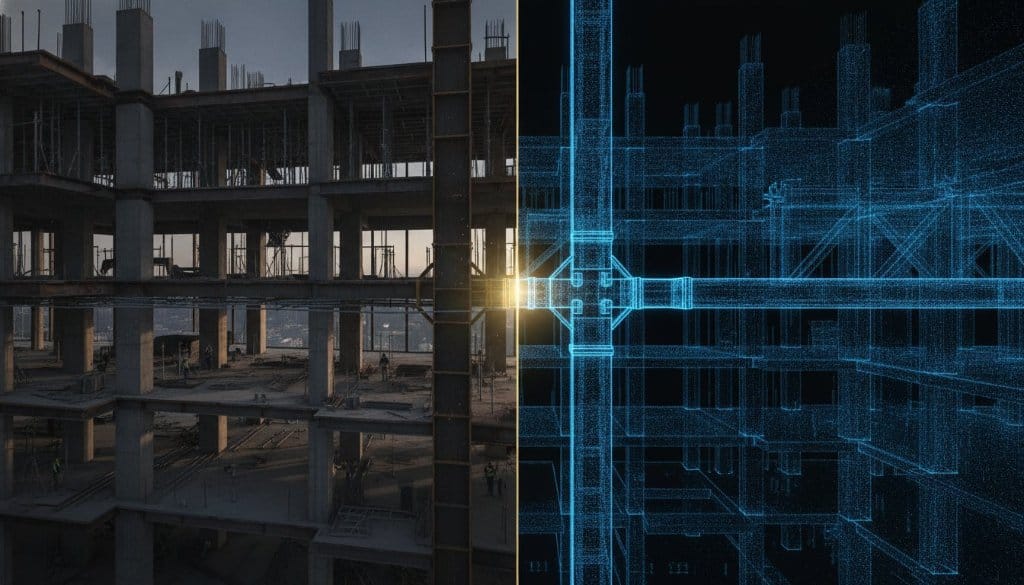
High-fidelity scans capture the "as-built" reality of a site with surgical precision. This isn't just about aesthetics; it's about structural truth. By utilizing point clouds, architects can identify minute structural shifts or degradation that the human eye would miss. This data becomes the foundation for future restoration, allowing for perfect replication of complex historical details. Integrating this precision with LiDAR architectural documentation provides a holistic view of the asset, from the intricate carvings on a facade to the sprawling landscape that surrounds it. We utilize Matterport as our foundation, but these are intelligent Matterport experiences, upgraded for business and engineered for the most demanding preservation standards.
The Technical Architecture of Preservation: LiDAR vs. Photogrammetry
Precision is not a luxury; it is a requirement. In the high-stakes world of 3D scanning for architectural preservation, the tools you choose define the lifespan and utility of the data you capture. Many providers treat scanning as a one-size-fits-all hobby, relying on basic sensors that fail to capture the true structural soul of a heritage site. We take a different path. At 360INT, we deploy a hybrid strategy that recognizes the unique strengths of both LiDAR and photogrammetry. This isn't just about taking pictures. It's about engineering a digital environment that is as technically robust as it is visually breathtaking.
The choice of hardware dictates whether your digital twin is a passive record or an active business asset. Passive, panoramic systems might look acceptable on a small screen, but they lack the intelligence required for facility management or detailed restoration. By combining advanced sensors, we create intelligent Matterport experiences that are upgraded for business. This technical rigour ensures that your heritage site is not just documented, but transformed into a functional platform for sales, engagement, and operational planning.
LiDAR: The Structural Skeleton
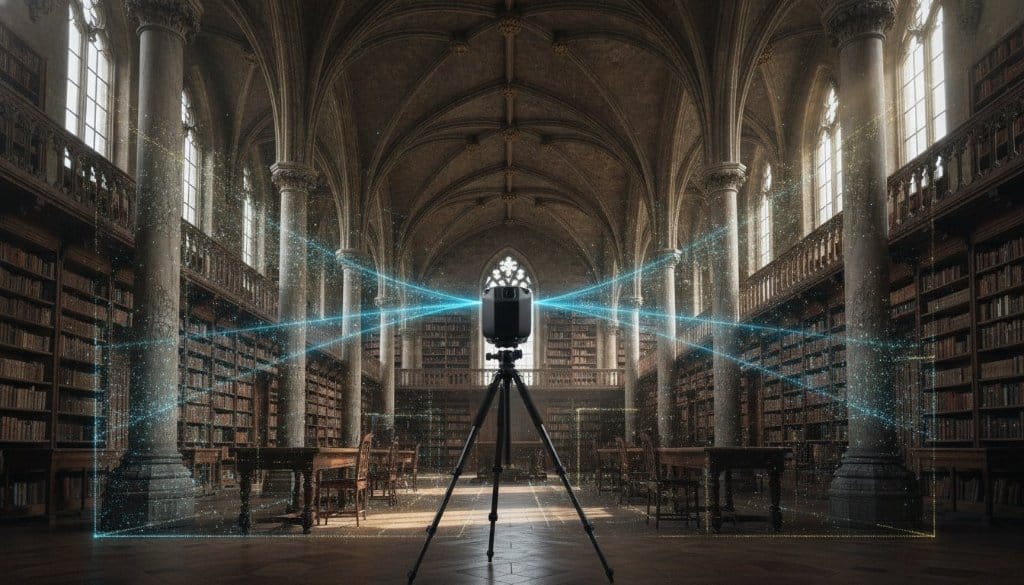
LiDAR, or Light Detection and Ranging, provides the mathematical foundation of our work. By firing millions of laser pulses per second, we generate a dense point cloud that documents every curve, column, and cornice with millimetre precision. This technology is indispensable for large-scale heritage sites where traditional measurements fall short. It allows us to see through visual noise to understand the true geometry of a space. When we utilize LiDAR, we are building a structural skeleton that supports drone 3D mapping for complete exterior preservation.
Photogrammetry: The Visual Soul
If LiDAR is the skeleton, photogrammetry is the skin and soul. This process involves stitching thousands of high-resolution images together to recreate realistic textures and surfaces. It's the only way to truly document historical frescoes, delicate stonework, and the nuanced patina of aged wood. Research into Emerging Technologies in Cultural Heritage highlights how these high-fidelity visual records are essential for both conservation and education. For us, this visual excellence is what transforms a technical model into an experience marketing platform. We deliver cinematic clarity that captures the emotional weight of history. If you are ready to protect your legacy with this level of detail, you can request a tailored strategy for your project today.
Passive Records vs. Intelligent Assets: Upgrading Matterport for Business
Most organizations view 3D scanning for architectural preservation as a way to freeze time. It's a noble goal, but it's fundamentally incomplete. Traditional 3D models often exist as passive records; digital ghosts that people look at but cannot interact with. These static representations lack the technical depth and business functionality required to drive real-world outcomes. We don't just capture spaces. We transform them. By moving away from the idea of "looking at a building" and toward "operating within a digital twin," we unlock the true commercial and historical value of heritage sites.
Our approach represents the next evolution of Matterport. Utilized Matterport. Enhanced by 360INT. While the foundational technology provides the spatial framework, we provide the intelligence and strategy built on top of it. Our custom software integrations turn a static scan into an interactive business environment where data and experience converge. This isn't a virtual tour. It's an experience marketing platform designed to qualify leads, enable sales, and streamline operations.
Integrating Interactive Storytelling Layers
Heritage is more than just stone and mortar; it's the narrative woven into the structure. To preserve this "soul," we layer interactive storytelling directly into the digital twin. We use custom branded overlays to guide visitors through a site's history, linking historical archives, blueprints, and multimedia documents to specific 3D hotspots. This methodology aligns with the best practices of 3D Scanning for Cultural Heritage Conservation, ensuring that data is both accurate and accessible. By creating immersive experiences that educate and engage, we turn 3D scanning for architectural preservation into a powerful tool for public outreach and stakeholder buy-in.
Operational Utility and MICE Sales
For heritage sites that function as commercial venues, the digital twin is a vital operational tool. Hospitality leaders use our platforms for remote venue inspections, allowing international event planners to visualize ballrooms and event spaces without a site visit. We integrate precise measurement tools directly into the interface, enabling MICE (Meetings, Incentives, Conferences, and Exhibitions) organizers to plan layouts with absolute certainty. This technical precision speeds up decision-making for commercial renovations and event bookings. It's about moving from a passive visual to a data-driven asset that generates measurable ROI and operational efficiency.
The Preservation Journey: Implementing 3D Scanning Strategies
A successful digital transformation doesn't happen by accident. It's a methodical progression from raw data to a sophisticated business asset. Many providers treat 3D scanning for architectural preservation as a simple point-and-click exercise. We see it differently. It's a four-phase journey that begins with a deep understanding of your strategic objectives. Whether the goal is historical archiving, planned renovation, or public engagement, every technical decision must align with the final commercial or cultural outcome. We don't just capture a space; we architect a future for it.
- Phase 1: Defining the Objective. We identify the primary purpose. Is this a tool for architects, a platform for stakeholders, or a cinematic experience for the public?
- Phase 2: High-Fidelity Capture. We deploy a hybrid of LiDAR and photogrammetry to document every millimetre of the structure.
- Phase 3: Intelligent Layering. This is the 360INT signature. We add proprietary business functionality and interactive storytelling onto the spatial data. It's the next evolution of Matterport.
- Phase 4: Global Deployment. The final digital twin is launched across web, VR, and operational platforms for maximum impact.
Pre-Scan Planning and Site Assessment
Precision requires preparation. Before a single sensor is activated, we conduct a rigorous site assessment to identify high-priority architectural features. These elements require maximum resolution to ensure their soul is captured for eternity. We coordinate drone mapping with interior scans to create a seamless, holistic digital twin of the entire estate. Lighting and access are meticulously optimized to meet elite architectural photography standards. This level of detail ensures the final product is not just a record, but a masterpiece of digital preservation.
Data Integration and Future-Proofing
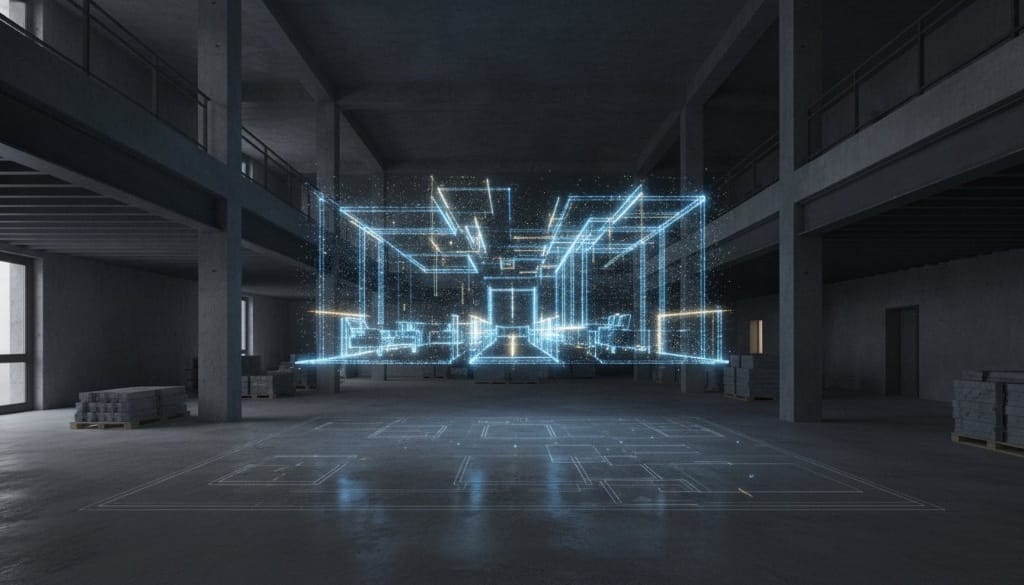
A digital asset is only as valuable as its utility. We ensure your data works for you by exporting high-fidelity scans directly into BIM (Building Information Modeling) environments. This allows architects and engineers to work with as-built conditions that are accurate to the millimetre. We also future-proof every project, ensuring compatibility with VR180 and emerging hardware. This isn't just about the technology of today. It's about long-term heritage monitoring and data management. If you're ready to start your journey, get a custom quote for your preservation project.
360INT: Visionary Architects of Digital Heritage Environments
Preservation is a profound responsibility. It requires more than just technical hardware; it demands a visionary approach that respects the soul of a structure while unlocking its commercial future. At 360INT, we've moved beyond the limitations of standard scanning providers. We don't offer simple virtual walkthroughs. We architect intelligent digital heritage environments. By choosing 3D scanning for architectural preservation through our lens, you aren't just documenting history. You're creating an active, data-driven business platform. We fuse bold creativity with surgical technical precision to ensure your asset is both protected and productive.
The standard industry approach is often passive and incomplete. Most services deliver a file and consider the job done. We believe that's only the beginning. Utilized Matterport. Enhanced by 360INT. We take the foundational spatial data and layer on proprietary intelligence that transforms a static record into an interactive business environment. This is the next evolution of Matterport. It's an upgrade for business that turns a historical site into a measurable sales and engagement tool.
Beyond the Walkthrough: Measurable ROI
Intelligent digital twins do more than just look beautiful. They drive results. For heritage hotels and landmarks, our platforms significantly reduce site visit costs and decrease dependency on third-party OTAs. By weaving immersive storytelling into the digital twin, we increase direct bookings and lead qualification. Stakeholders and event planners can explore every corner of a venue with absolute confidence in its spatial accuracy. High-fidelity cinematic videography further elevates this experience, capturing the emotional resonance of the space for high-end marketing. This isn't just preservation. It's a strategic investment in operational efficiency and ROI.
Global Expertise in High-Fidelity Solutions
Our experience spans the most demanding sectors, from luxury hospitality and retail to global real estate. We understand that a heritage brand requires a premium, high-fidelity touch that balances technical authority with a luxury sensibility. 360INT differentiates itself through proprietary tech layers that standard scanning services simply cannot provide. We don't just capture the geometry; we capture the experience. We invite you to collaborate with us on the next evolution of your architectural legacy. If you're ready to transform your historic space into a powerful business asset, contact us for a bespoke preservation strategy today. Let's build a digital world that honors the past while dominating the future.
Architecting the Digital Legacy of Tomorrow
The standard for heritage documentation has shifted. Passive photography and manual measurements are no longer enough to safeguard our architectural history. By embracing 3D scanning for architectural preservation, you're doing more than archiving stone and mortar. You're creating a high-fidelity digital twin that serves as a functional business platform. We've explored how the synergy of LiDAR and photogrammetry provides the structural truth and visual soul necessary for modern conservation. This is the next evolution of Matterport. It's an intelligent Matterport experience, upgraded for business.
360INT stands as your visionary partner in this transformation. As Matterport Digital Twin specialists with over 10 years of immersive marketing experience, we bring a level of technical depth that standard providers can't match. Our aerial LiDAR and drone mapping experts ensure every detail is captured with surgical precision. It's time to move beyond passive visuals and embrace a platform that drives ROI and operational efficiency. Elevate your heritage asset into an intelligent digital twin with 360INT. Your legacy deserves a future as enduring as its past.
Frequently Asked Questions
What is the difference between a 360 virtual tour and a 3D scan for preservation?
A traditional 360 virtual tour is often a passive, panoramic experience that offers no geometric data or structural depth. In contrast, 3D scanning for architectural preservation captures the actual spatial volume and mathematical geometry of a site. We utilize Matterport as a foundation but enhance it with intelligent layers that transform a simple visual into a robust business asset.
How accurate is 3D scanning for architectural documentation?
Professional 3D scanning provides millimetre-accurate documentation of a structure's current state. By utilizing high-end LiDAR sensors, we capture "as-built" conditions that traditional manual surveys simply can't replicate. This precision is vital for identifying minute structural shifts or planning intricate restoration work with absolute technical certainty.
Can 3D scans be integrated into BIM software for restoration?
Yes, our high-fidelity scans integrate seamlessly with BIM software like Revit and AutoCAD. We provide the technical depth required for architects and engineers to develop detailed restoration plans based on precise point cloud data. This ensures that every historical detail is preserved within a modern, data-driven digital workflow.
How long does it take to scan a large historic building?
The timeframe depends on the building's complexity and the required level of detail. A mid-size historic structure typically requires one to three days for on-site data capture. We prioritize surgical precision over speed to ensure every architectural nuance is documented for the final digital twin.
What are the benefits of using drones for architectural preservation?
Drones allow for the comprehensive documentation of exterior facades, rooflines, and hard-to-reach architectural features. By coordinating drone mapping with interior scans, we create a holistic digital record of the entire heritage estate. This is essential for exterior preservation and large-scale site management that manual surveys can't achieve.
How does 3D scanning help with heritage site insurance and risk management?
3D scanning creates an irrefutable, permanent record of a heritage site for insurance and risk management. In the event of damage or disaster, this data serves as a millimetre-accurate blueprint for reconstruction. It provides stakeholders with the confidence that their cultural and financial assets are digitally safeguarded for eternity.
Can I use a 3D scan for both preservation and marketing?
You can use a single high-fidelity scan for both technical preservation and high-end experience marketing. While the data supports structural conservation, the visual output serves as an engagement platform for public outreach or MICE sales. It's a dual-purpose asset that maximizes ROI for heritage brands and hospitality venues.
What is an "intelligent" digital twin in the context of architecture?
An "intelligent" digital twin is a spatial model layered with interactive data and business functionality. Unlike a passive 3D model, it integrates historical archives, live booking tools, or facility management data directly into the experience. It's the next evolution of Matterport, designed specifically to be upgraded for business.